What is customer advocacy, and how to build it

I have spent most of my career on the demand gen side of the house, and the cheapest pipeline I ever found did not come from ads. It came from customers who liked us enough to tell other people, on the record, without being asked twice. For a stretch I worked at what was the largest customer marketing and advocacy platform around at the time, where the entire business was turning happy customers into a force that markets and sells for you. So I have run this motion, watched it work, and watched it fail. The failures almost always trace back to the same thing: treating advocacy as a campaign you run instead of a relationship you keep.
This is the practitioner version. What customer advocacy actually is, why it earns its keep, how it differs from the things people confuse it with, the program I would build, the tools worth paying for, and how to know if any of it is working.
What is customer advocacy?
Customer advocacy is what happens when a customer promotes you to other people because they want to, not because you paid them. A review, a referral, a reference call for a prospect, a post about something they built with you, an answer to a stranger's question in your community. The common thread is that the message comes from a peer instead of from your marketing team, which is exactly why it lands.
That is the whole mechanic. People trust other people more than they trust brands. Nielsen has measured this for years in its global trust surveys, and recommendations from people you know sit at the top every time, well above any ad format. Advocacy is the discipline of earning those recommendations on purpose and at scale, instead of hoping they happen.
A quick distinction that matters: an advocate is not the same as a satisfied customer. Plenty of people are happy with you and will never say a word in public. Advocacy is the bridge from private satisfaction to public action, and most of the work is building that bridge.
The job is to move people up that ladder, one rung at a time, and to make each step easy. Nobody wakes up wanting to be a reference. They get there because you noticed them, gave them a reason, and made saying yes painless.
Why customer advocacy is worth the work
Advocacy is slower than buying clicks, so be honest about what it returns before you staff it. The programs that survive do a handful of real jobs for the business at once.
It lowers the cost of new pipeline, because a referred buyer arrives already trusting you and tends to stick around longer. There is good academic work behind this, not just vendor marketing: a long-running Wharton study of a German bank's referral program found referred customers were both more loyal and more profitable over time. It feeds sales, because a reference call from a real customer at the right moment closes deals that a deck never will. It builds proof, the case studies and quotes and stats your whole funnel runs on. And it gives product a steady read on what your most invested users actually want.
There is a quieter return too. The customers who advocate for you are the ones least likely to leave, because the act of advocating deepens their own commitment. You are not just extracting marketing from them. You are giving your best customers a way to be seen, and that turns out to be its own retention play. Advocacy is one piece of a wider customer marketing motion, and it is usually the piece with the highest return once it is running.
Customer advocacy vs the things people confuse it with
Advocacy gets lumped in with referrals, loyalty, and influencer marketing, and the differences are not academic. They change what you build and how you measure it.
The line that matters runs through motivation. A referral bonus or a loyalty point is a transaction: do this, get that. An influencer deal is a contract. Advocacy is the one driven by how the customer actually feels, which makes it the hardest to manufacture and the most valuable when it is real. You can absolutely wrap incentives around it, and you should, but the moment the incentive becomes the reason, you have a referral program wearing an advocacy badge. Customers can tell the difference, and so can their audiences.
How to build a customer advocacy program
You do not launch advocacy. You assemble it, in order, and most of the early work is unglamorous. Here is the sequence I run.
A few notes from doing this more than once. Start narrower than feels comfortable: ten genuine advocates who will take a reference call beat a list of two hundred names that no salesperson trusts. Make the ask specific and small, because “would you be a reference” is a bigger commitment than “can we quote the thing you already said in Slack.” And treat recognition as the actual product. The status you give an advocate, the early access, the spotlight in front of their peers, is usually worth more to them than a gift card, and it costs you less.
The piece teams skip is the loop. When an advocate does something for you, close it: thank them, tell them what it did, and let them see the result. Advocacy that only flows one way dries up, every time.
The tools that actually help
You can start a program in a spreadsheet, and you should, until the manual work becomes the bottleneck. Past that point the tooling matters, and the landscape splits cleanly by job. My bias, having built this motion, is to get the foundation right first: a place where customers actually gather and engage. The point solutions layer on top of that, not the other way around.
Here is how I would map it, with the honest version of what each layer is for.
Do not buy the whole row. Most teams need the foundation plus one point solution for the job that hurts most right now, usually references or proof. Add the rest when the manual version of that job is genuinely slowing you down, and not before.
What customer advocacy looks like in the wild
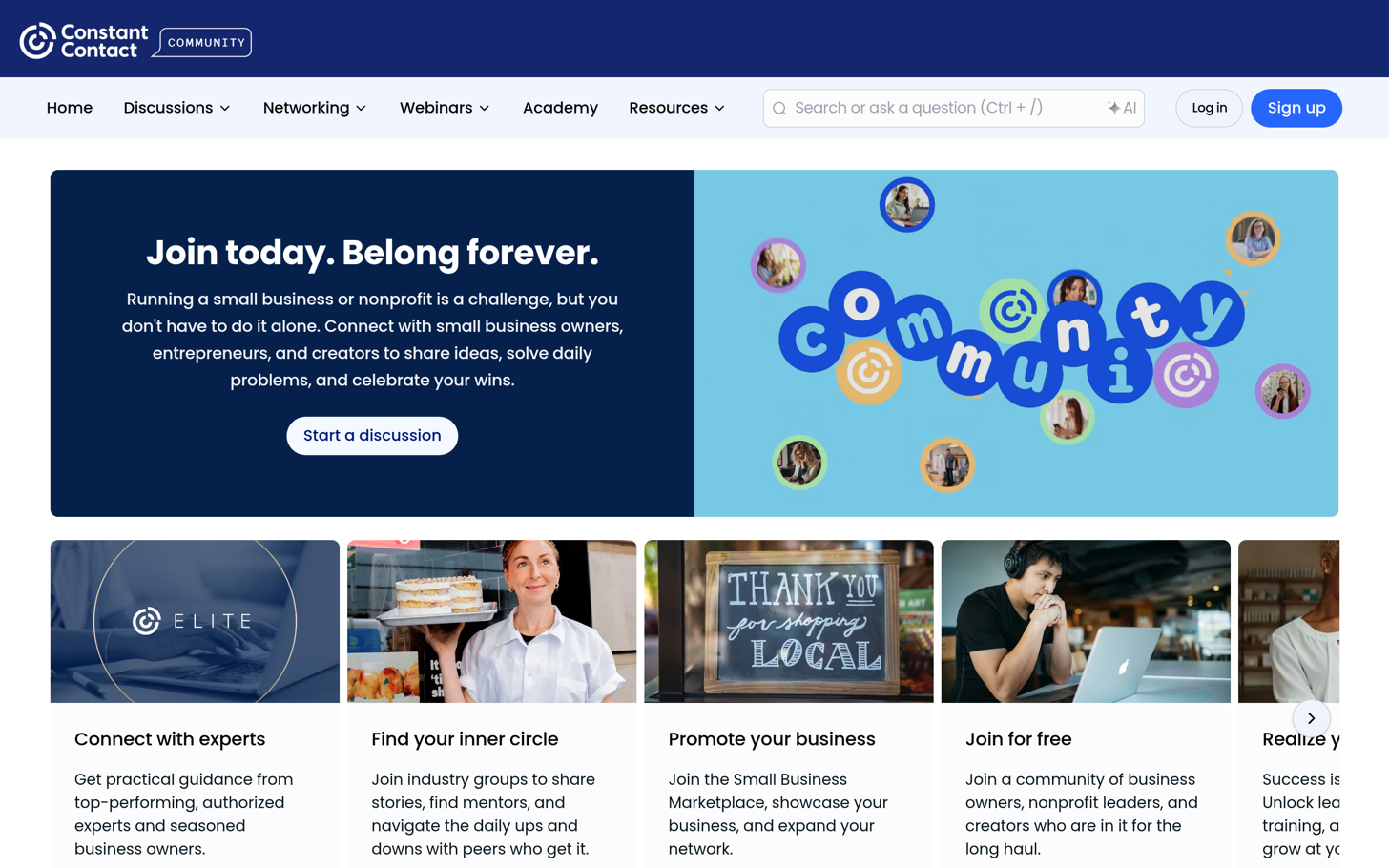
The fastest way to understand a grown advocacy motion is to look at one. Constant Contact runs a public community where small business owners and nonprofits trade advice, learn, and promote their own work. Notice the framing: “join today, belong forever,” groups to find your people, an academy, a marketplace to promote your business. None of that is a hard sell. It is a place worth showing up to, and the advocacy falls out of the belonging.
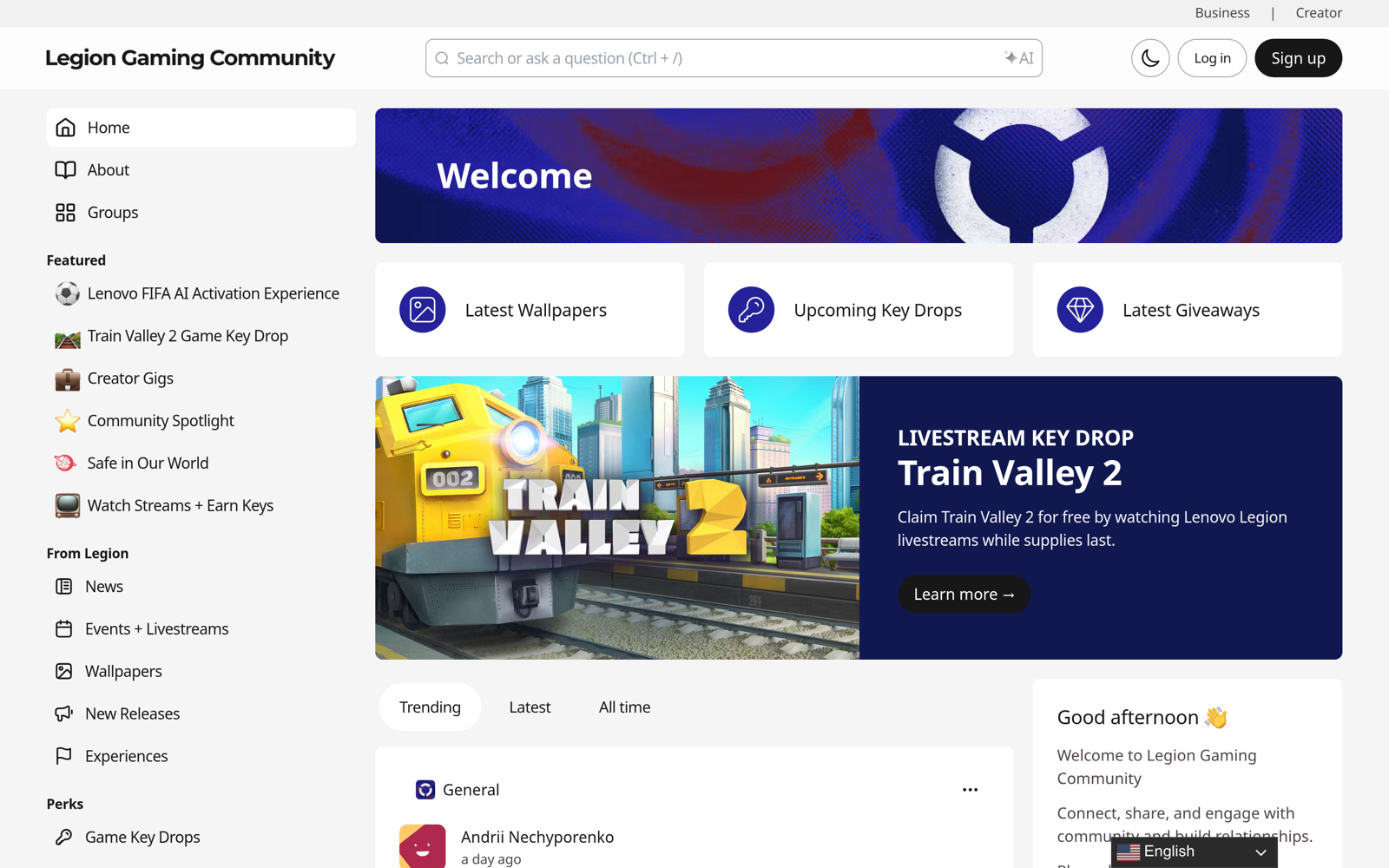
You see the same pattern in B2B. Lenovo built its Legion gaming community on Bettermode into a place players return to for reasons that have nothing to do with a sales pitch, and those players become the people who recommend the hardware to the next buyer.
Xano runs its developer community the same way, with feature requests and product help in one owned hub. The members who shape the roadmap are the ones who vouch for it to other developers, because they have a stake in it.
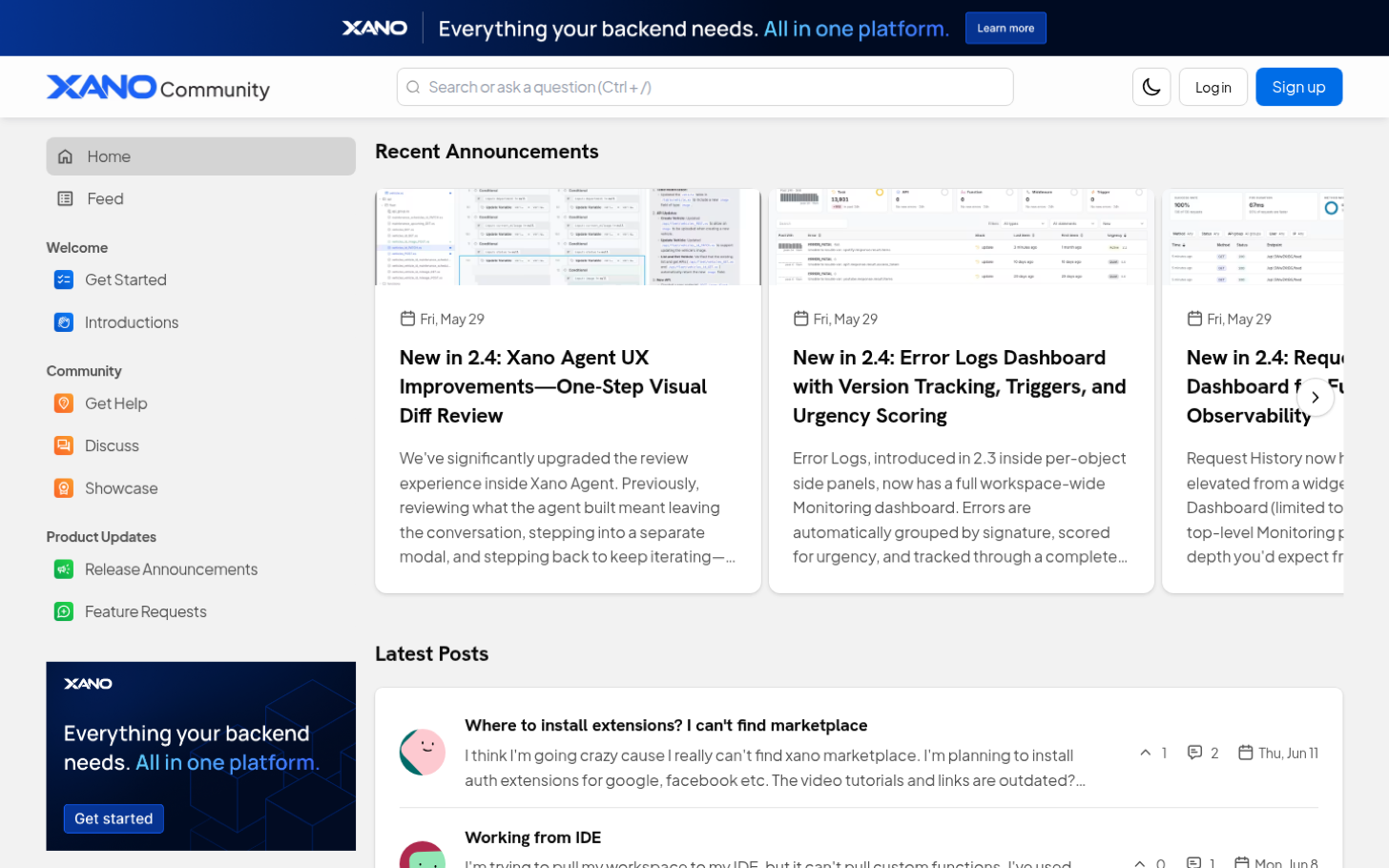
What all three share is that advocacy is not a program bolted onto the side. It is the natural output of a place customers actually value, which is the whole argument for building the foundation first.
How to measure customer advocacy
Advocacy is harder to measure than a paid channel, which is exactly why so many programs lose their budget. Pick a few numbers, tie them to outcomes leadership already counts, and report them every month.
If you can only show one number to a skeptical CFO, make it pipeline influenced next to advocate retention. The first proves advocacy creates revenue, the second proves it protects it.
Advocacy is becoming an answer engine play
Here is a shift worth planning around. Buyers no longer just read your case studies. They ask Google, and increasingly an AI assistant, and those tools answer from whatever they can find in public. Reviews, community threads, and customer stories are exactly the kind of content they pull from, because a real customer's words read as trustworthy in a way your own copy never will.
So the proof your advocates create is doing double duty now. A strong review or a public community answer helps the next buyer who reads it, and it feeds the systems that more and more buyers ask first. The programs that bank a steady supply of genuine customer voice, in public, are quietly building an asset that pays off in places a paid campaign cannot reach.
Where this leaves you
Customer advocacy is the highest-trust, lowest-cost growth you can build, and it is also the slowest, because it runs on real relationships and those take time. Start with the foundation, a place your customers want to be. Move people up the ladder on purpose. Make the ask small, recognize the people who say yes, and always close the loop. Buy a point tool when the manual work breaks, not before. Measure the pipeline it influences and the retention it protects, and the budget conversation takes care of itself.
A community platform like Bettermode is where a lot of this comes together, because it gives your advocates somewhere to gather, your team a way to spot and recognize them, and your whole motion a home. The tools above make the program run. The relationships make it work.
TL;DR
- Customer advocacy is customers promoting you because they want to, through reviews, referrals, references, and word of mouth. It works because people trust peers over brands.
- An advocate is not just a happy customer. The work is moving people up the ladder from private satisfaction to public action.
- It pays off in lower-cost pipeline, faster sales, real proof, and stronger retention, since advocating deepens a customer's own commitment.
- It is not a referral program, a loyalty scheme, or an influencer deal. Those are transactions or contracts; advocacy is driven by how the customer feels.
- Build it in order: find advocates, give them a reason, make the ask small and specific, recognize them, wire it to your CRM, and close the loop.
- Get the community foundation right first, then add point tools by job: Base or SlapFive for program management, Point of Reference or RO Innovation for references, UserEvidence for proof, Champion for finding advocates.
- Measure active advocates, pipeline influenced, proof produced, advocate retention, and second-order revenue. Lead with pipeline influenced and retention.
- Advocate-created proof now feeds AI answer engines too, so a steady supply of public customer voice compounds in a new way.
FAQ
What is customer advocacy in simple terms?
It is when customers promote your brand to other people on their own, because they had a genuinely good experience. That can be a review, a referral, a reference call, social posts, or helping another customer in your community. It carries weight because it comes from a peer rather than from your own marketing.
What is the difference between customer advocacy and a referral program?
A referral program pays a customer to bring in a lead, so the action is driven by the reward. Advocacy is driven by how the customer feels about you, and the public support comes whether or not there is an incentive attached. You can run referrals inside an advocacy program, but the moment the reward is the only reason, it stops being advocacy.
What does a customer advocate do?
A customer advocate vouches for you to people considering a purchase. In practice that means leaving reviews, taking reference calls, speaking at events, posting about results they got, and answering questions from prospects and other customers. They are usually your most engaged and loyal users, the ones who would recommend you anyway.
How do you build a customer advocacy program?
Start by identifying your genuinely happy, engaged customers, often the ones already active in your community or scoring high on NPS. Give them a clear reason and an easy, specific way to help, recognize them publicly, connect the activity to your CRM so you can prove its impact, and close the loop every time someone advocates. Begin small with a handful of reliable advocates rather than a long list.
What are some examples of customer advocacy?
A customer leaving a detailed G2 review, taking a sales reference call for a prospect, posting on LinkedIn about results they achieved, answering another user's question in a brand community, or referring a peer. Companies like Constant Contact, Lenovo, and Xano run communities where this kind of peer-to-peer advocacy happens at scale.