How to grow an online community: the complete playbook
I have grown online communities from an empty shell with three seeded posts to tens of thousands of active members, and I have also watched well-funded ones die quietly in month four. The difference is almost never the platform. It is whether someone treats the online community like a product with a job to do, instead of a forum you switch on and hope for. I spent a chunk of my career at what was the largest customer marketing and advocacy platform around at the time, where the whole business was helping companies turn customers into an engaged community, so this is the playbook I have actually run, not the theory.
This is the long version: what an online community really is, why it is worth the effort, the types and the best examples to learn from, and then the step-by-step of getting real people to show up, post, help each other, and keep coming back. Standing a community up takes an afternoon. Growing one is the work, and it is the part everyone underestimates.
What is an online community?
An online community is a branded space where the people who care about your product, your topic, or your mission gather to talk to each other and to you. The key word is “each other.” A social media following is one-to-many: you broadcast, they react. An online community is many-to-many: members answer each other's questions, swap ideas, and build relationships you are not even in. That shift, from audience to participants, is what makes a community compound instead of just consume.
It helps to separate the two models you can build on. An owned community lives on a platform you control, with your branding, your data, and the ability to wire it into your product. A rented one lives in someone else's house, a Facebook group, a subreddit, a Discord server, where you borrow the audience and play by their rules. Both can work. But the further you want to take a community, the more the owned model pays off, because you can integrate it, measure it, and keep it when the rented platform changes its mind.
An online community is not a help desk, a newsletter, or a comments section. It is the place those things point to, where the relationship actually lives.
Why grow an online community
A community is a lot of work, so be clear on what it returns. The good ones do real jobs for the business, usually several at once:
- Support that scales. Members answer each other, which deflects tickets and turns your best customers into a 24/7 support layer. The answers get indexed and help the next person too.
- Retention. Customers with a relationship beyond the product churn less. A community is where that relationship forms.
- Product feedback. A community is the cheapest, fastest voice of the customer channel you will ever run: continuous, in context, and honest.
- Advocacy and acquisition. Superusers become advocates who bring the next members in, and member-generated content becomes an SEO and word-of-mouth engine over time.
- Belonging. The one nobody puts on a slide and everybody feels. People stay where they feel known.
You do not need all of these on day one. You need to pick the one that matters most right now, because that choice shapes everything that follows.
The types of online communities
Not every online community is built for the same job. Knowing which type you are growing keeps you from copying tactics that were never meant for your goal.
Most real communities are a blend, but one type leads. A support community that tries to be a fan community feels off, and a brand community run like a help desk feels cold. Pick the lead, build for it, and let the rest come second.
Examples of online communities worth learning from
The fastest way to understand what a grown online community looks like is to look at ones that work. Here are five, and the one thing worth stealing from each.
Atlassian: peer support at scale
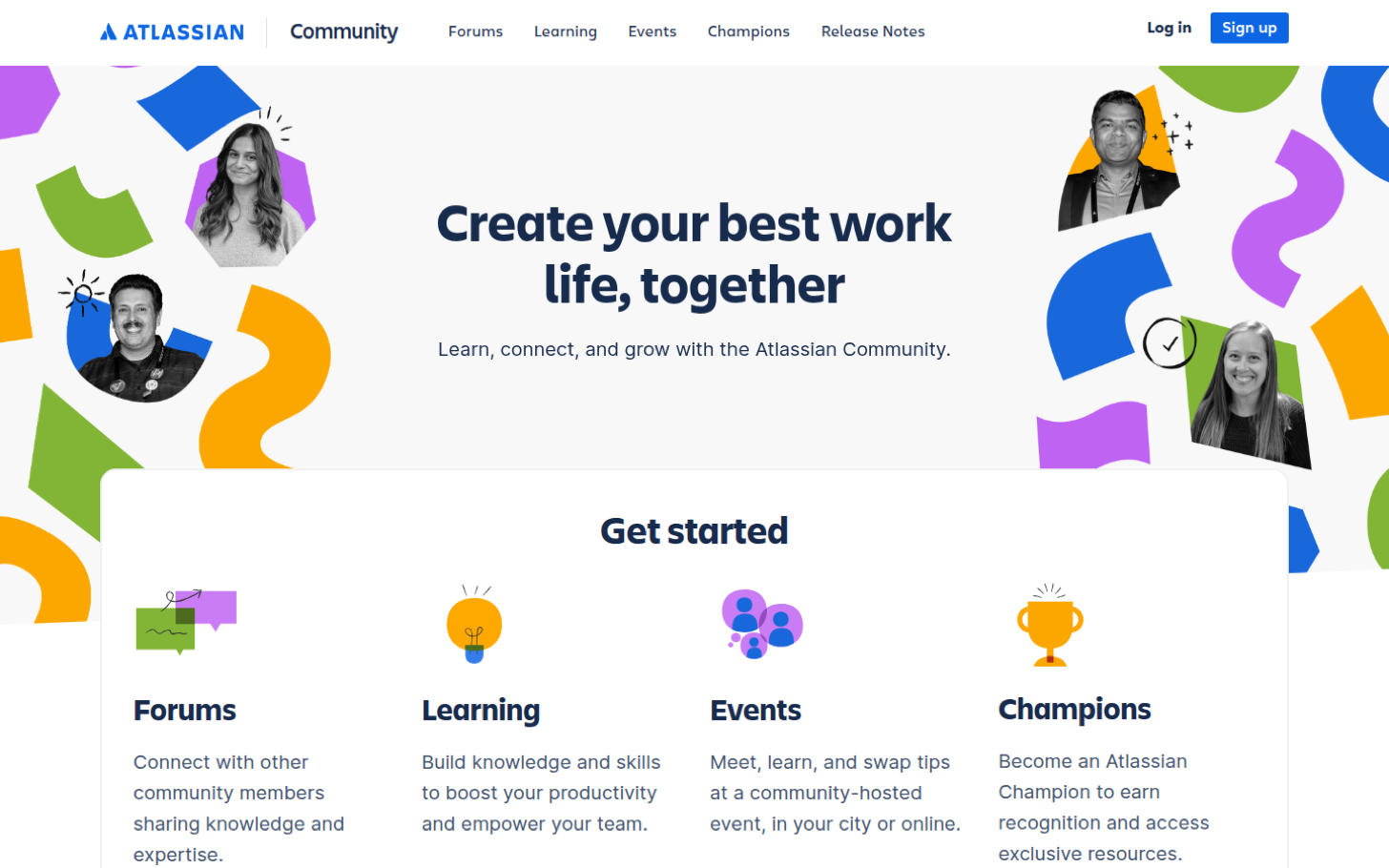
Atlassian's community is a support engine. Customers answer each other's questions, vote on features, and surface edge cases the day they appear, which deflects an enormous volume of tickets while keeping every answer searchable for the next person. The takeaway: when members help members, your support cost stops scaling with your customer count.
Lenovo Legion: a brand community as a destination
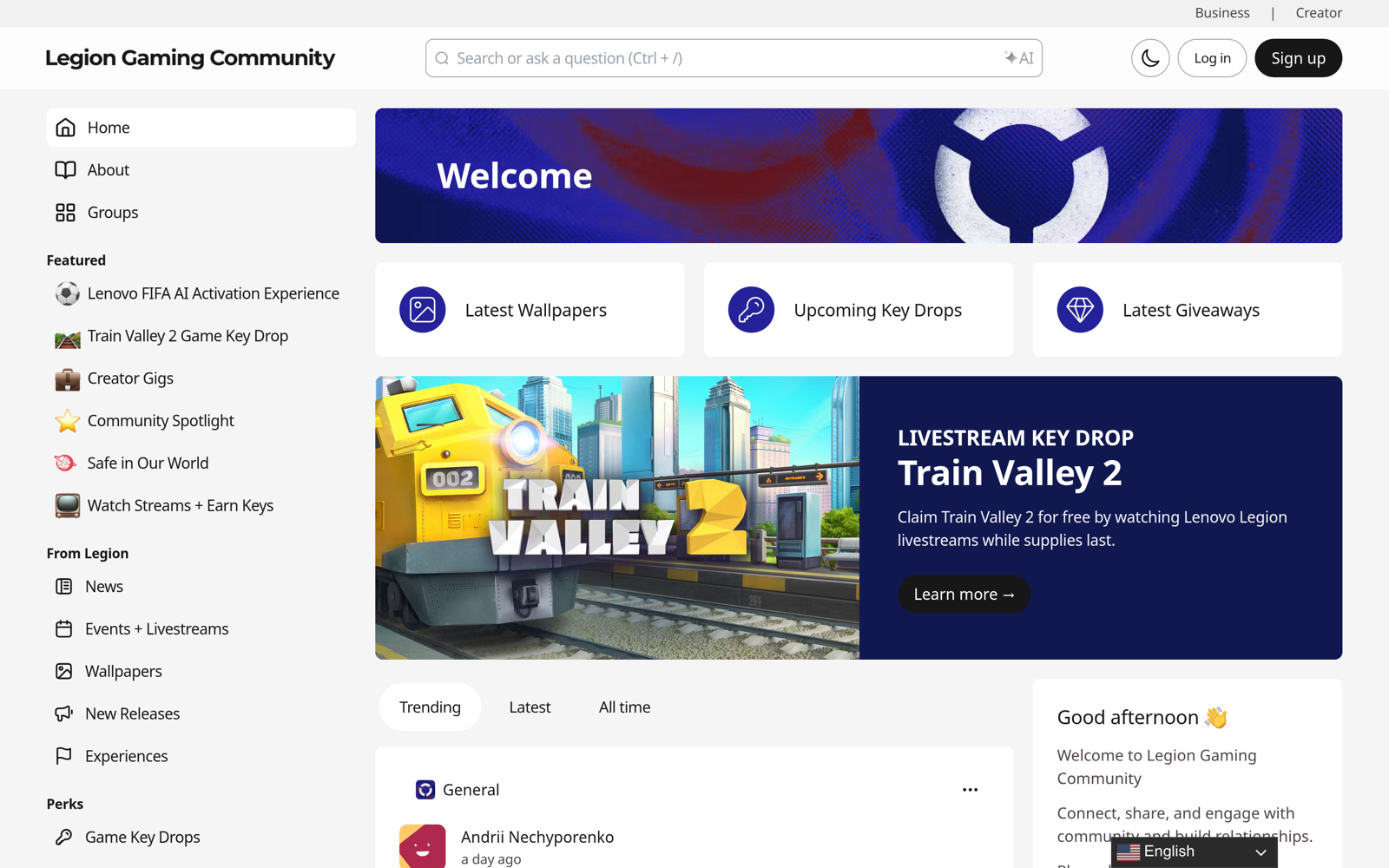
Lenovo built the Legion gaming community on Bettermode into a place players come back to for reasons that have nothing to do with buying a laptop: game key drops, livestreams, wallpapers, and other players. That is the move. A brand community grows when it gives members an identity and a reason to return, not a sales pitch.
Xano: product feedback in the open
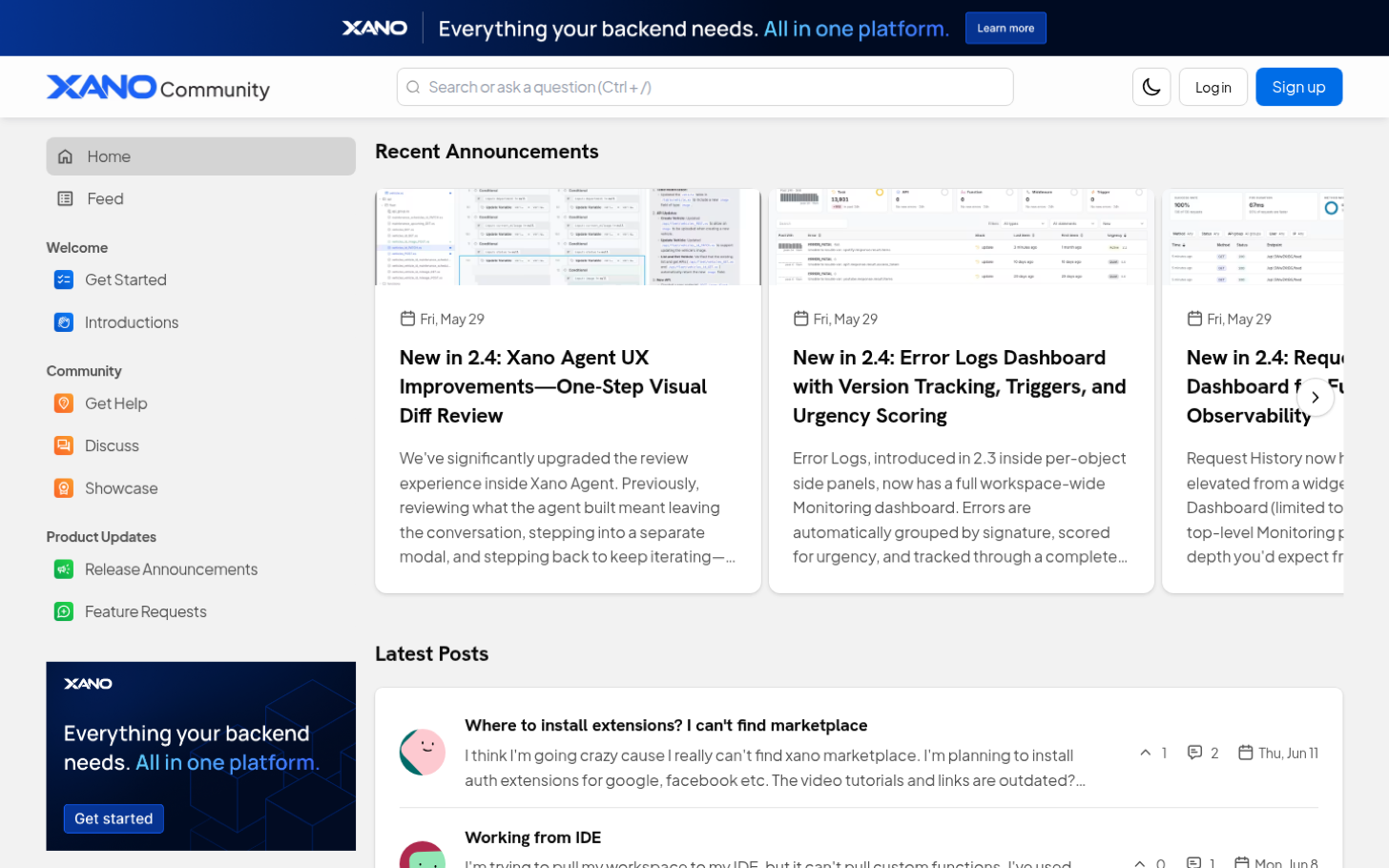
Xano runs its developer community on Bettermode with feature requests, product updates, and support living in one owned hub. Members vote on what gets built and watch it ship. The takeaway: a product community turns your roadmap into a conversation, and the people who shape it stick around to see it through.
Notion: growth powered by what members make
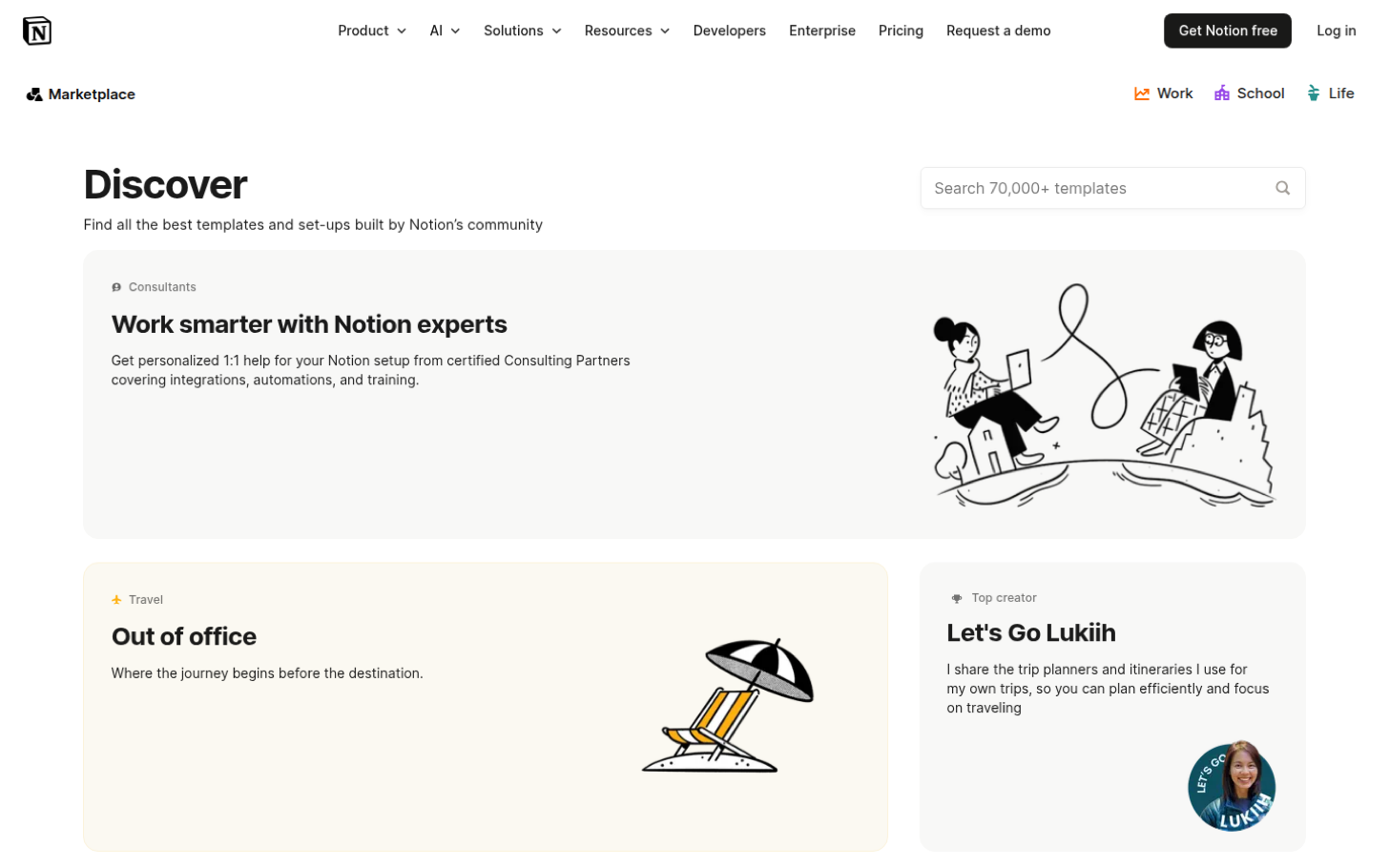
Notion's community produces tens of thousands of templates, setups, and tutorials that members search, share, and sell. The community is the product's distribution. The takeaway: if you make it easy for members to create and showcase, their work becomes your most credible acquisition channel.
Discord: real-time belonging
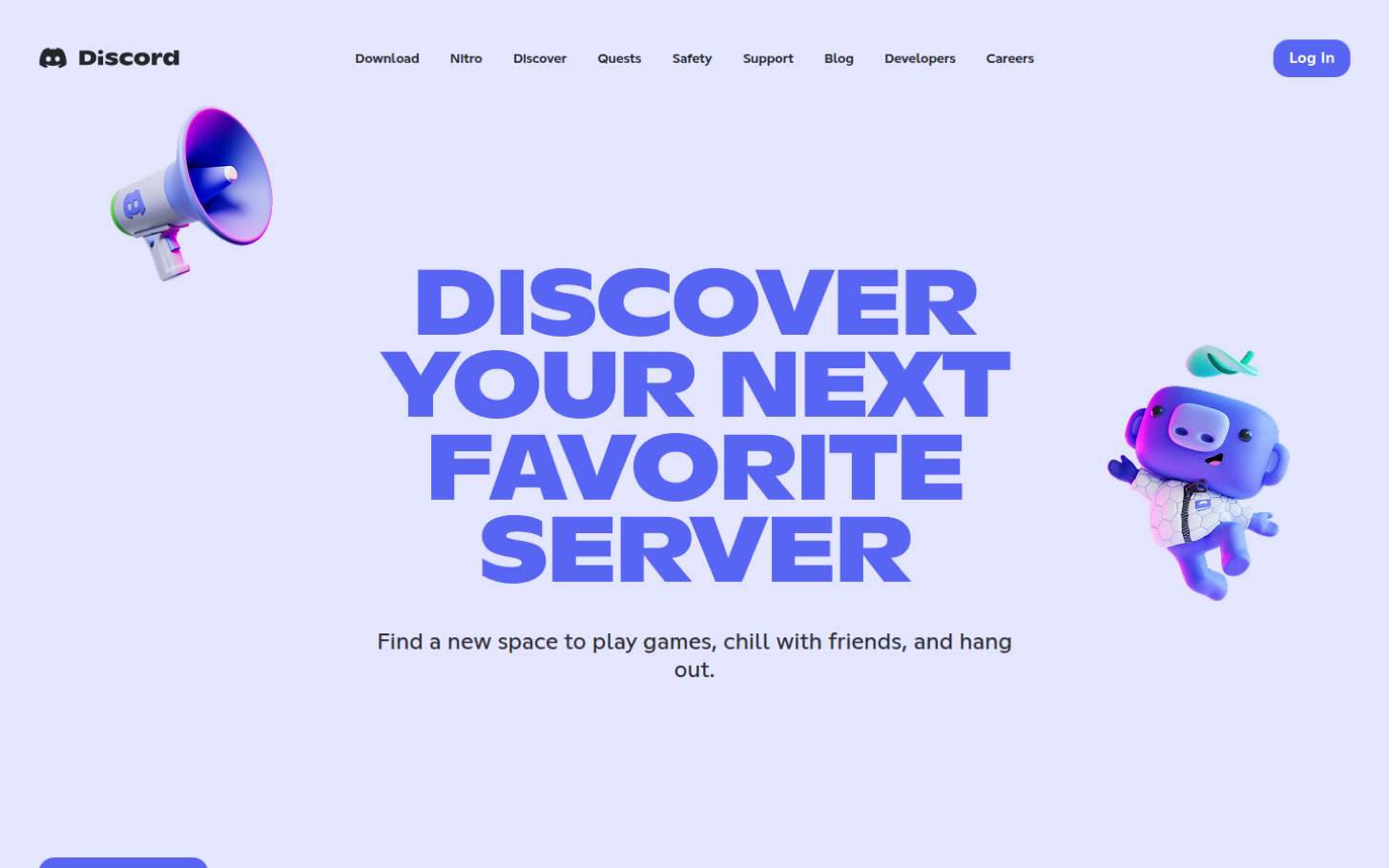
Discord communities thrive on synchronous, low-stakes conversation, the always-on hangout. It is fantastic for energy and belonging, and weak on permanence: conversations scroll away and are hard to search later. The takeaway: real-time chat builds culture fast, but pair it with something searchable if you want the knowledge to last.
First, decide what “grown” actually means
A bigger member count is the vanity metric that kills more online communities than anything else. Ten thousand members who never return are just a mailing list with extra steps. The growth that matters is active members: people posting, answering, voting, and coming back without an email nudging them. Before you chase numbers, write down the one behavior that defines a healthy online community for you, whether that is questions answered, ideas submitted, or members returning each week. That is the number you are actually growing.
The growth flywheel
Growing an online community is not a funnel with an end. It is a flywheel: each stage feeds the next, and the payoff is the loop. Attract the right people, onboard them well, give them a reason to engage, earn their return, and turn the most active into advocates who bring in the next members. Get the wheel turning and growth compounds. Skip a stage and it grinds.
The rest of this guide is each stage of that wheel, in the order I run them.
The playbook to grow an online community
None of these steps are glamorous. Run them in order and an online community grows; skip the boring ones and it stalls.
Win internal buy-in with a number, not a vision
Every community needs budget and patience, and you get neither by talking about “engagement.” You get it by tying the community to something leadership already counts: support cost, retention, pipeline. Before I launch anything, I find the metric the community can move and I promise a small, early win against it. Quick wins buy the long runway a community actually needs, because the real payoff is a year out and nobody funds a black box for twelve months.
Start with one goal, not five
The most common launch mistake is trying to serve support, marketing, product, and success on day one. A community that does everything does nothing well, and members feel the lack of focus immediately. Pick one primary goal, then build the spaces, seed the content, and write the welcome around that single job. You can layer the others in once you have an active core, and you will, but not in month one.
Meet members where they already are
The platform matters less than the fit. The right community platform is the one your members will actually open, which means matching it to how they already behave. A developer audience that lives in docs wants something different from a creator audience that lives on Discord. Owned platforms give you control, your branding, and the integrations to wire the community into your product, which is why branded online communities tend to outlast a rented corner of someone else's network like Facebook groups or a subreddit you do not control. That said, if your people will only ever gather in a Facebook group today, start there and earn the move later.
Seed it before you open the doors
An empty community is the fastest way to lose the members you worked to attract, because nobody wants to be the first to speak in a silent room. Before you invite anyone, seed it: thirty to fifty genuine posts, a few answered questions, an intro thread, a couple of discussions you actually care about. Recruit a small founding group, ten or twenty people who will reliably reply, and brief them before launch. The goal is simple. The first real member who walks in should see a room that is already alive.
Make onboarding do the heavy lifting
The first five minutes decide whether a new member ever comes back. Good onboarding for new members is fast and pointed: show them the one space that matters, prompt a single action like an intro or a vote, and make the value obvious before you ask for anything. I keep a standard welcome flow but personalize the first nudge to why that member joined. Welcome threads, a short guided tour, and a buddy for your highest-value members all work. A generic “welcome to the community” email that leads nowhere does not.
Moderate lightly, and let members own it
A community needs guidelines, but heavy-handed moderation kills the thing you are trying to grow. Write clear, human content rules, then trust your community members to hold the line. When something does cross it, a quiet private message usually beats a public ban. The communities that feel alive are the ones where members, not staff alone, keep each other on track, and that only happens when you leave them the room to.
Wire the community into your product
A community that lives off to the side stays a side project. The ones that earn their keep get integrated: discussions that turn into support tickets with full context, member activity logged in your CRM so you can prove engaged customers retain better, embedded widgets that surface community answers inside the product itself. This is also where an owned community pulls clear of a Facebook group, because you can connect it to the systems that prove its worth.
Turn your superusers into advocates
Every healthy online community grows a handful of people who answer more questions than your own team does. Find them, recognize them, give them status and early access. These superusers become the advocates who make a community self-sustaining and who bring in the next wave through genuine word of mouth. A real customer advocacy motion is how a community stops depending on you and starts compounding on its own.
Where new members actually come from
Engagement keeps an online community alive, but growth also means new members walking through the door, and they rarely arrive on their own. “Build it and they will come” is not a plan. You have to route people to the community the same way you route them to any product. The channels that reliably bring members, in rough order of value:
- Your own product. The highest-intent members are already using you. Prompt them inside the app at the moment they would benefit: an unanswered question, a feature they just used, a place to share what they built. In-product entry points out-convert everything else.
- Email to existing customers. Your customer list is the warmest audience an online community will ever have. A short note pointing to a specific space and a specific reason to join beats a generic “we have a community now” blast.
- Search. A community that gets indexed and answers real questions becomes its own acquisition channel over time, as member-written threads rank and pull in people searching for those answers. It compounds slowly, and it is one of the quiet advantages of an owned community platform over a closed Facebook group.
- Your existing members. Once you have an active core, your community members are your best recruiters. Make sharing easy, recognize the people who bring others in, and a healthy community starts seeding its own growth.
- Events and social. Webinars, AMAs, and a steady social presence give people a reason to show up and a place to land. Treat each one as a doorway into the online community, not a standalone moment.
Pick two channels to start, not all five, and make each point to a specific space with a specific reason to join. A focused invitation into an active room converts; a generic link to a quiet one does not.
Your community is becoming an answer engine
There is a newer reason this matters, and it is one I would not have written a year ago. Search is no longer a page of ten blue links. Google's AI Overviews and tools like ChatGPT now answer questions directly, and they pull those answers from somewhere. More and more, that somewhere is community threads, because a real member question with a real accepted answer is exactly the format these systems trust.
Ask Google how to schedule events further than three months out in Calendly, and the AI Overview writes its answer straight from two threads in Calendly's own community.
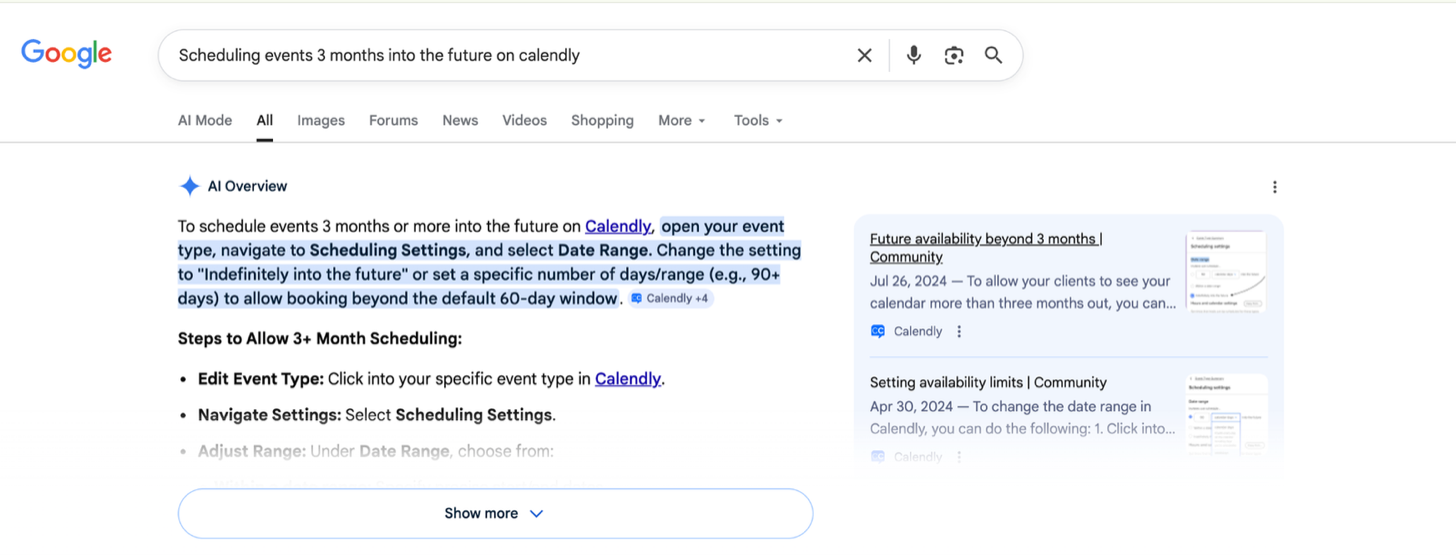
Your help docs might get cited. Your community has a better shot, because the exact long-tail questions other customers are typing into Google are already asked and answered there in public. An owned community that lets its threads get indexed is building an asset that pays off in answer engines as much as in classic search. A closed Facebook group, invisible to every crawler, builds you none of it.
Keep it active: the engagement engine
Here is the part nobody likes to hear: community engagement rarely sustains itself, especially early. The idea that you seed an online community and then it runs on its own is a myth that has quietly killed countless of them. For the first several months you are the engine, posting, asking, replying, recognizing the community members who contribute, and showing up every day.
Build a rhythm you can keep. A weekly prompt that invites easy replies. A recurring event, an AMA or office hours, that gives people a reason to show up live. Recognition for the members who answer, because status is the cheapest and most powerful currency a community has. And gamification that rewards the behavior you actually want, helping others and contributing, rather than empty point-farming that just inflates a leaderboard. Organic momentum is real, but you earn it after months of manual work, not by flipping a switch.
How to measure community growth
Growth shows up in behavior before it shows up in headcount. A community where members answer each other and keep coming back is growing even if the headline number is flat, and a community adding signups who never return is shrinking in every way that counts. Track behavior, and put it next to the business metric you tied the community to at the start.
Report the behavior numbers next to the business outcome in your leadership update, and the budget conversation takes care of itself.
Why online communities fail
Most communities do not fail loudly. They fade. After enough of them, the causes rhyme, and every one is avoidable.
Fix the owner, the focus, the seeding, the metric, and the follow-through, and you have avoided almost every way a community dies.
Choosing a community platform
The platform will not grow the community for you, but the wrong one makes everything harder. Match it to where your members already gather and to how far you want to take it. A branded community platform gives you ownership, integrations, moderation control, and the data to prove value, which matters the moment you want a seat in the budget conversation. A Facebook group or a Discord server gets you started for free and meets a casual audience where they are, at the cost of control, data, and permanence. There is no universal right answer, only the fit for your members and your goal. If you want the deeper comparison, our guide to community platform software lays out the tradeoffs.
What this looks like at Bettermode
We run our own product feedback inside a Bettermode community, on a public Wishlist board where customers post ideas, everyone upvotes, and the status moves from “under consideration” to “delivered” in the open.
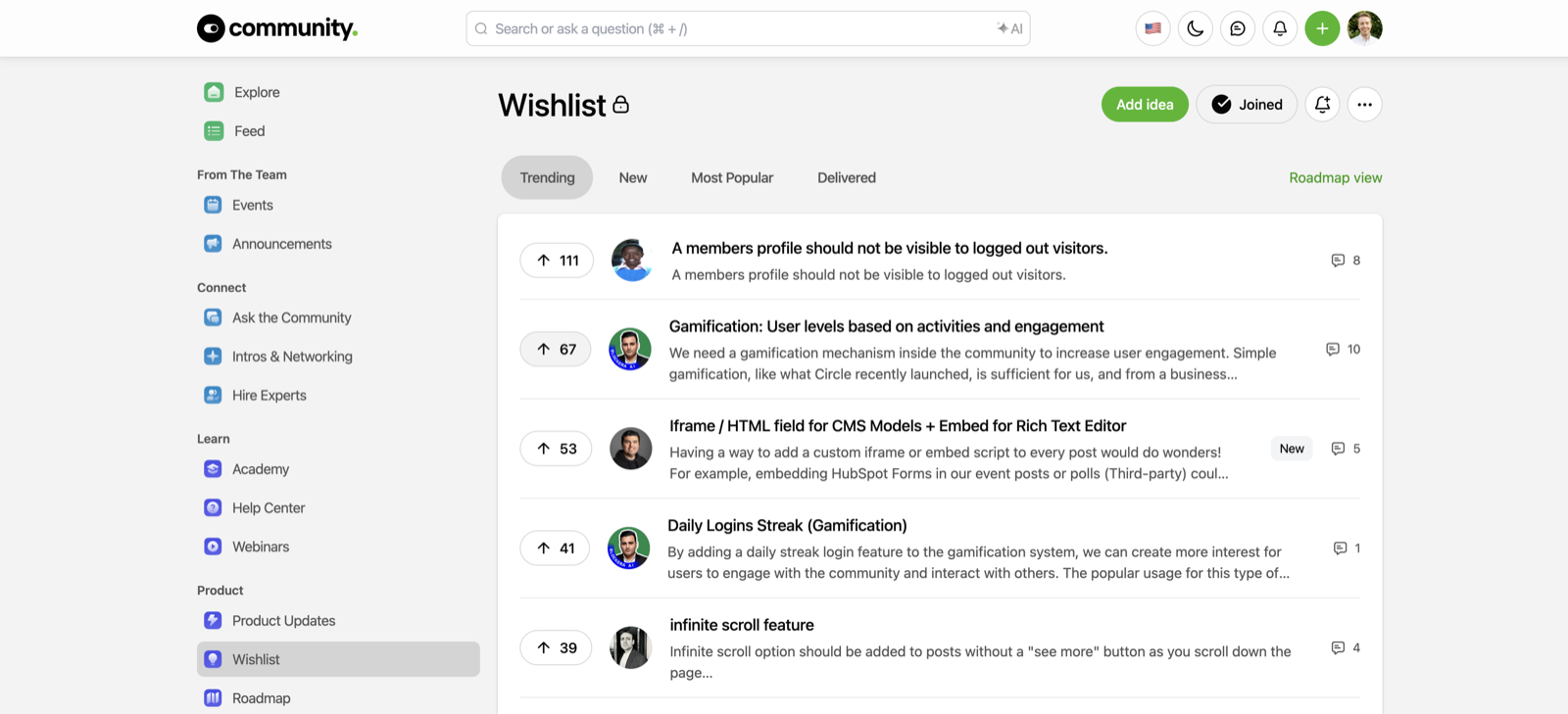
It is the whole flywheel in one screen: a focused goal, members doing the work, the loop closed in public, and the community wired straight into how we build. Our customers run the same model at scale, Lenovo with the Legion community above, Xano with its developer hub, and many more in branded online communities where the engagement, the answers, and the proof all live in one owned place. That is what a grown community looks like, members showing up because the room is worth their time.
TL;DR
- An online community is a many-to-many space where members talk to each other, and to you. That shift from audience to participants is what makes it compound.
- Grow it for real jobs: support that scales, retention, product feedback, advocacy, and belonging. Pick the one that matters most now.
- Know your type (support, product, brand, customer, learning, or creator) and learn from the best examples: Atlassian for peer support, Lenovo Legion for brand, Xano for product feedback, Notion for member-made growth, Discord for real-time belonging.
- Growth is a flywheel: attract, onboard, engage, retain, advocate, and the advocates bring the next members.
- The playbook: win buy-in with a number, start with one goal, pick the platform members will use, seed before launch, make onboarding fast, run the engagement engine yourself early, moderate lightly, wire it into the product, and turn superusers into advocates.
- Measure behavior (return rate, member-answered rate, contributors) next to the business metric, not vanity signups. Communities fail from no owner, no focus, empty launches, vanity metrics, and a neglected loop.
- Owned, branded online communities outlast rented ones because you can integrate them and prove their worth. That is the case for a platform like Bettermode.
FAQ
How long does it take to grow an online community?
Plan for six to twelve months to reach self-sustaining engagement. The early months are manual: seeding, onboarding founders, and showing up daily. Momentum compounds once you have an active core answering each other, but it rarely arrives before then.
How do I build an online community from scratch?
Start with one clear goal and the platform your members will actually open, then seed the space with thirty to fifty real posts and a small founding group before you invite anyone. Open to a room that already looks alive, route your warmest audience in from your product and your customer email list, and only then worry about scale. Standing the community up takes an afternoon. The playbook above is how you grow it from there.
What is the difference between an online community and a social media following?
A following is one-to-many: you post, they react, and the relationship runs through you. An online community is many-to-many: members talk to each other, build relationships you are not in, and create value that outlasts any single post. A following rents attention; a community builds an asset you own.
What is the most important metric when growing a community?
The share of members who come back, and the percentage of questions answered by other community members. Both measure whether the community delivers enough value to pull people in without a nudge. Tie them to a business outcome like support cost or retention for the leadership conversation.
Do I need a community manager to grow an online community?
Yes, or at least someone who clearly owns it. Community engagement does not run itself in the early months, and splitting the job across people who already have full-time roles is how communities quietly die. Even a part-time owner beats no owner.
Where should I host my online community?
Wherever your members already gather, balanced against how much control you need. A branded community platform gives you ownership, integrations, and data a Facebook group never will, which matters the moment you want to prove the community's value. If your audience only gathers on social today, start there and earn the move.
How do I get the first members into a new community?
Seed it first so it is not empty, then route your warmest audience in: existing customers by email, users from inside your product, and a small founding group you brief before launch. Start with two channels, point each at a specific space with a specific reason to join, and grow from the active core outward.