Self-Service Support: A Comprehensive Guide to Self-Service Software
Don't take this the wrong way, but your customers need a little space from you—it's not you, it's them.
The truth is, customers want to be more self-reliant. They want to solve problems on their own without contacting support. Think of it this way: When your washer cuts out mid-cycle, are you picking up the phone and waiting on hold for a live agent? Or are you heading online and searching for a troubleshooting guide?
The latter option is called self-service support—when customers use your resources to help themselves rather than reaching out directly to your team. And 88% of customers expect brands to offer this.
To provide self-support options, companies are embracing customer self-service software. These tools empower customers to quickly find solutions to common issues while lowering your costs and relieving your support team.
What Is Self-Service Software?
Self-service software describes a collection of tools designed to help customers troubleshoot simple issues on their own without speaking to an agent. These tools include knowledge base software, community forums, chatbot tools, and ticketing systems.
Self-service solutions are often automated, freeing up agents to work on other tasks. Since content is formulated around frequently asked questions, self-support resources help eliminate repetitive queries from your live support queue.
Companies that use virtual customer assistants report a drop of up to 70% in their call, chat, and email queries.
Why Self-Service Software Is Gaining Popularity
Self-service software is experiencing tremendous growth, with a global market size expected to hit $32 billion by 2027. Here are the top benefits:
Meets Customer Expectations
Today's customers are used to communicating through digital technology and often prefer not to speak on the phone. In fact, 81% of Millennials say they have to work up the courage just to make a phone call.
But while customers don't necessarily want to talk to you, their service expectations are higher than ever. They want immediate solutions and convenient experiences.
Self-service tools help you meet these expectations. Customers are instantly connected to straightforward solutions so they can troubleshoot issues as they please.
Reduces Support Costs
Self-service portals can drastically reduce your support costs. It costs far less to serve a customer with self-service than with live help. Research suggests live help costs about $8 per transaction, while self-service tools cost only 10 cents.
Enabling customers to help themselves reduces support tickets, meaning you'll need fewer support reps. The same self-service resources can be utilized by thousands of customers at once.
Provides 24/7 Support
Self-service software has no off-hours. Customers can reach the help they need no matter the time of day.
This is a difference-maker for smaller service teams, allowing them to provide 24-hour support without agents around the clock. It's also crucial for supporting global customers across time zones.
Improves Staff Satisfaction
Customer demands are increasing, and the pressure falls squarely on your support staff. More than a quarter of customer service workers have experienced emotional burden at work, and over 50% of call center workers feel burned out daily.
Self-service tools ease this burden. By fielding routine questions, these tools lighten the load from live agents dealing with high ticket volumes. Your agents can spend more time on complex matters, boosting satisfaction.
Improves Product Adoption
Online self-service provides customers with access to tons of resources about your products. These resources encourage customers to learn more and familiarize themselves with new features. Customers more quickly learn the value of your offers, improving product adoption.
Software Categories That Enable Self-Service
Knowledge Bases
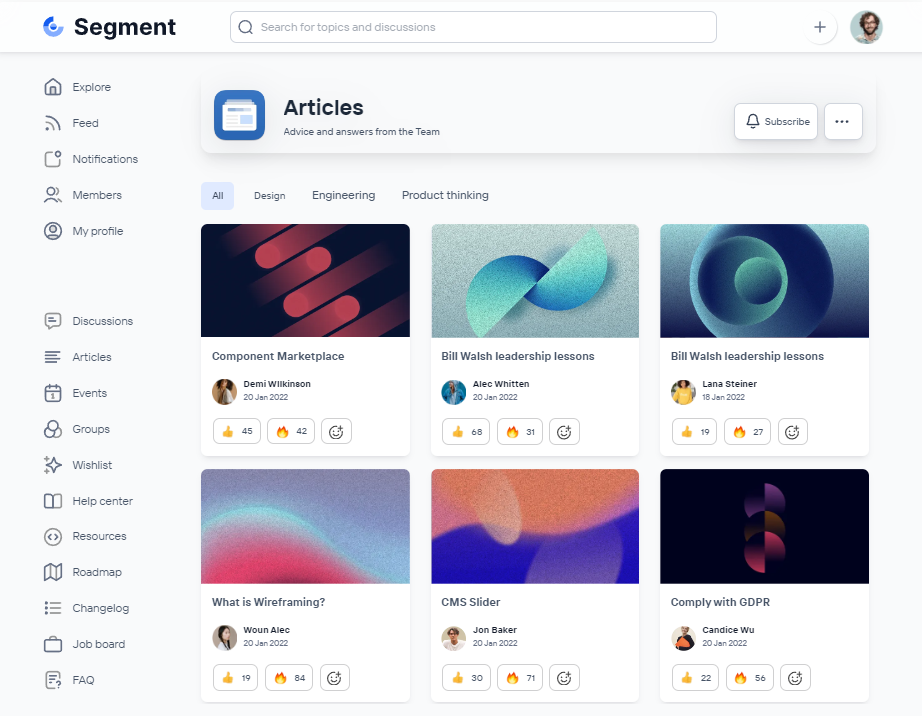
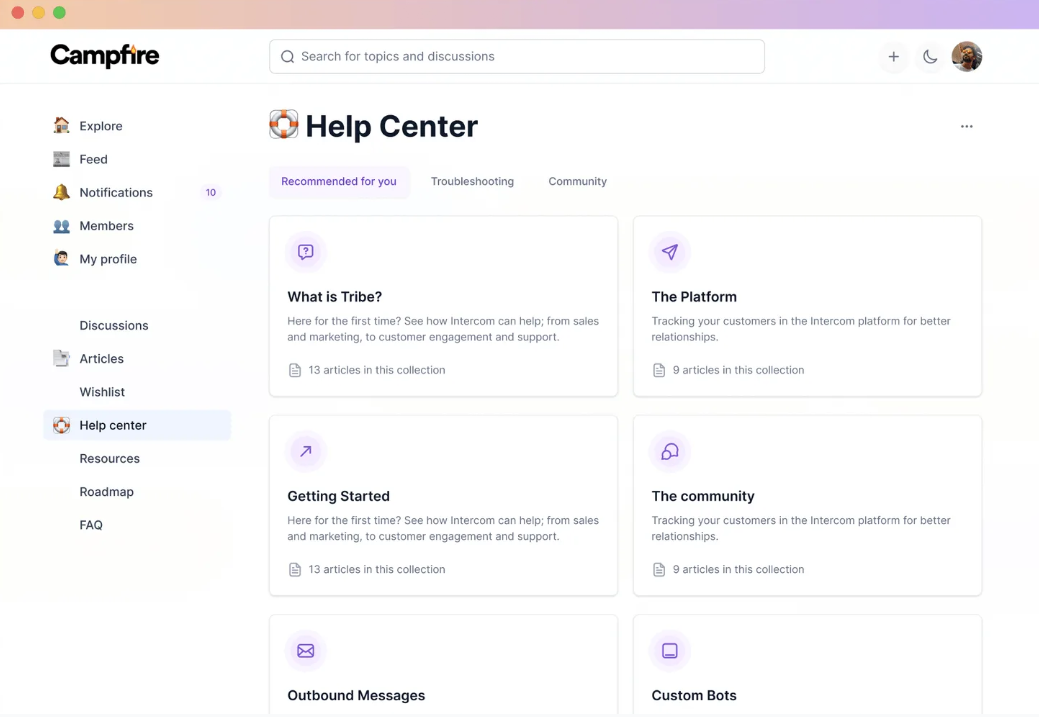
A knowledge base (also called a help center) is an online hub full of detailed information about your products and services. Resources include FAQ pages, user guides, articles, video tutorials, and links to live help.
Knowledge bases cover the most commonly asked questions and are organized so customers can quickly find answers. They often include advanced search functionality and are highly effective at offloading routine queries.
Community Platforms
Community platforms are online customer spaces focused on engagement, sharing, and discussion. They connect customers to self-service tools like knowledge bases, video tutorials, how-to guides, and FAQ pages.
Communities typically include forums or Q&A software, allowing customers to post questions and ask for guidance. Support agents monitor discussions and jump in as needed, but customers can also help each other. Since conversations are saved, customers can easily search past discussions.
Chatbot Software
Chatbots are great for supplementing other self-service options. They provide customers with immediate, personalized assistance and can integrate with knowledge bases to respond with links to helpful articles.
These tools mimic human conversation without needing a live agent. Many modern chatbots are powered by AI, interpreting customer messages and responding with relevant information. They can work alongside live chat, offering escalation to live support when needed.
What to Look for in Self-Service Software
Knowledge Discoverability
No matter how much information you load into self-service tools, none of it's useful if customers can't find it. Look for software with advanced search functionality using tags and keywords.
Knowledge Management
Some solutions offer tools to manage and update your help center, including publishing tools and dashboards showing trending content and what needs reviewing.
Automation
Automation streamlines workflow tasks. For example, advanced ticketing tools can automatically tag and route issues to specific agents. This is especially useful for large businesses with high ticket volume.
Integrations
Self-support tools work best when they can work together. Integrations allow you to seamlessly transfer requests from one channel to another without losing background information or making customers start over.
Reporting and Analytics
The best self-service tools provide valuable metrics regarding support performance. This helps you understand where customers experience frustration so you can refine processes.
Metrics include customer satisfaction scores, customer effort scores, time to response, tickets closed, frequent requests, and most visited pages.
Scalability
Your support tools should handle future needs as well as current ones. Look for a platform that grows with your business and consider how growth will affect pricing.
Top Self-Service Software Options
Bettermode
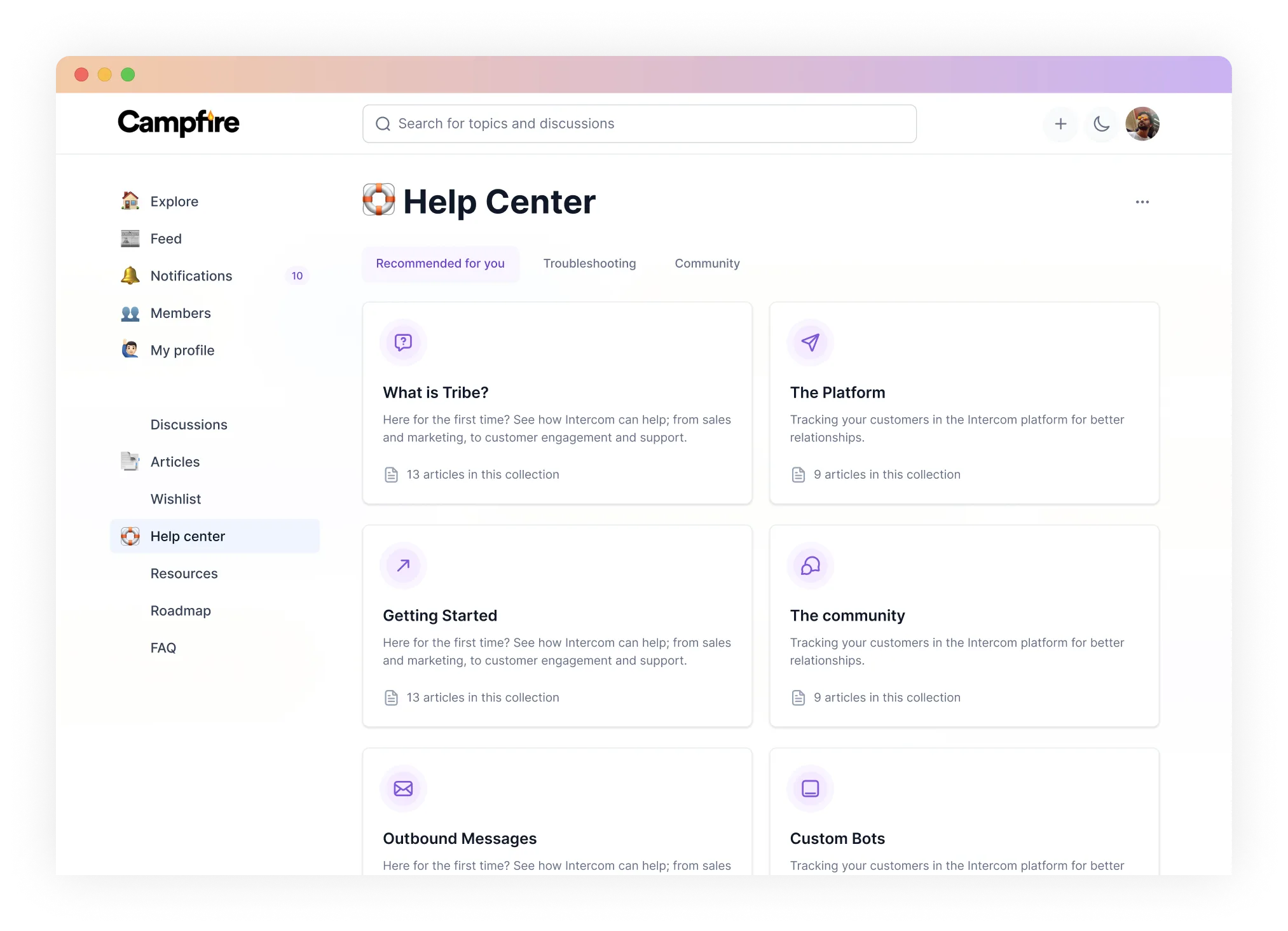
Bettermode is an all-in-one customer community platform designed to help businesses take control of their customer experience. It brings self-service support, customer success initiatives, and feedback collection together in one fully customizable space.
The platform offers discussions and Q&A features that encourage peer-to-peer support, taking pressure off your support team while giving customers faster answers. You can create custom spaces for different types of content and resources, keeping everything organized and easy to find. Tags and advanced search functionality make navigation intuitive, so members can quickly locate what they need. Built-in analytics help you understand what's working, and SEO features ensure your community content gets discovered organically.
Intercom
Intercom has built its reputation as a customer communications platform that blends personalized support with automation. Whether customers want to chat with a live agent or find answers on their own, Intercom handles both. The standout feature is Business Messenger, which combines live chat and AI-powered chatbot software into a seamless experience. It's particularly popular with SaaS companies looking to engage customers throughout their journey, from onboarding to ongoing support.
Zendesk
Zendesk is a heavyweight in the customer service space, offering a broad toolkit that includes live chat, voice support, and AI-powered bots. The ticket management system is where it really shines—packed with features for routing, prioritization, and tracking. It's a solid choice for teams handling high volumes of support requests across multiple channels who need robust workflows to keep everything moving.
Document360
Document360 focuses specifically on knowledge base software, helping companies build polished online help centers for both customers and internal teams. You can create FAQ pages, user guides, and detailed technical documentation without needing a developer. The platform includes sophisticated analytics so you can see which articles are performing, where users are getting stuck, and what content gaps exist. It's ideal for organizations that want a dedicated, professional-grade knowledge hub.
LiveAgent
LiveAgent positions itself as an all-in-one help desk solution with a strong emphasis on omnichannel communication. It pulls together live chat, email, phone, video, and social media into a single interface, so your team isn't jumping between tools. It's particularly useful for businesses that need to meet customers wherever they are and want everything consolidated in one dashboard.
Comparison table
| Feature | Bettermode | Intercom | Zendesk | Document360 | LiveAgent | Discourse |
|---|---|---|---|---|---|---|
| Best For | B2B SaaS, customer communities | Customer messaging & engagement | High-volume support teams | Knowledge base & documentation | Omnichannel help desk | Developer communities |
| Primary Focus | Community & self-service | Conversational support | Ticket management | Help center content | Multi-channel support | Yes (self-hosted) |
| Free Plan | Yes | No | No | No | No | $50/month (hosted) |
| Entry Price | $149/month | $39/seat/month | $19/agent/month | $149/project/month | $9/agent/month | $100/month |
| Mid-Tier Price | $1,500/month | $99/seat/month | $55/agent/month | $299/project/month | $29/agent/month | $300/month |
| Enterprise Price | Custom | $139/seat/month | $115/agent/month | Custom | $49/agent/month | Requires technical expertise |
| Community Features | Full platform | Limited | Limited | No | No | Technical setup needed |
| Live Chat | No (integrates with others) | Yes | Yes | No | Yes | No |
| AI Chatbot | No | Yes | Yes | No | Yes | No |
| Knowledge Base | Yes | Yes | Yes | Yes (core feature) | Yes | Yes (via plugins) |
| Ticket Management | No | Yes | Yes (core feature) | No | Yes | No (mobile-responsive) |
| Q&A / Forums | Yes | No | Community add-on | No | No | Via plugins |
| Peer-to-Peer Support | Yes | No | Limited | No | No | No |
| Analytics | Yes | Yes | Yes | Yes | Yes | Yes |
| CRM Integrations | HubSpot, Salesforce (native) | Native CRM | Native CRM | Limited | Limited | Any (technical teams) |
| Customization | Fully visual, no-code | Moderate | Moderate | Template-based | Limited | |
| SEO Features | Yes | Limited | Limited | Yes | No | |
| Target Company Size | SMB to mid-market | SMB to enterprise | SMB to enterprise | SMB to enterprise | SMB to mid-market |
Conclusion
It's an exciting time for customer support as self-service software is booming. These tools help you provide the immediate support customers crave while lowering costs and improving staff morale.
Self-service tools work alongside your live agents, helping you offer a better, more dynamic customer service experience.
Community platforms designed for B2B SaaS—like Bettermode—provide comprehensive self-service capabilities: community forums, knowledge bases, Q&A, and integrations with support tools.
Ready to implement self-service support? Book a demo with Bettermode.
FAQs
What is self-service software?
Self-service software is a collection of tools designed to help customers troubleshoot issues independently without speaking to an agent. This includes knowledge bases, community forums, chatbots, and ticketing systems.
How much can self-service reduce support costs?
Significantly. Research suggests live help costs about $8 per transaction, while self-service costs only about 10 cents. Companies report up to 70% reduction in call, chat, and email queries with virtual customer assistants.
What's the most important feature in self-service software?
Knowledge discoverability. No matter how much content you have, it's useless if customers can't find it. Look for advanced search functionality, clear organization, and intuitive navigation.
Should self-service replace live support?
No—self-service should complement live support, not replace it. Handle routine questions with self-service, but always provide clear paths to human agents for complex issues.

Bettermode Blog


Book a demo
Discover how Bettermode fits your business.